
Unlock the power of IRA investing to secure your financial future. An Individual Retirement Account (IRA) is more than just a savings account; it’s a powerful tool designed to help your money grow over time, often with significant tax advantages. By engaging in IRA investing, you can build a substantial nest egg for retirement, leveraging benefits like tax-deferred growth or tax-free withdrawals. This guide will demystify IRAs, explain your options, and provide actionable steps to start building wealth today.
Understanding IRAs: The Basics of Retirement Savings
An Individual Retirement Account (IRA) is a specialized investment account that offers tax benefits to encourage saving for retirement. Unlike a workplace 401(k), an IRA is opened by an individual, giving you complete control over your investment choices. It’s a foundational component of many successful retirement strategies.
Why IRAs Matter in Real Life
IRAs are crucial because they allow your investments to grow with significant tax advantages. This can mean more money in your pocket during retirement. Imagine you start investing $5,000 annually at age 30. If your investments grow by an average of 7% per year, you could accumulate hundreds of thousands of dollars by retirement, thanks to the power of compound interest.
Without an IRA’s tax benefits, a portion of your annual gains would be taxed, slowing down your growth. With an IRA, those gains are either taxed later (Traditional) or not at all (Roth), allowing your money to snowball much faster. This accelerated growth is why IRAs are a cornerstone of effective financial planning.
Types of IRAs: Traditional vs. Roth
The two most common types of IRAs are Traditional and Roth, each with distinct tax treatments.
- Traditional IRA: Contributions are often tax-deductible in the year they are made, reducing your taxable income now. Your investments grow tax-deferred, meaning you don’t pay taxes on earnings until you withdraw the money in retirement. This is typically beneficial if you expect to be in a lower tax bracket during retirement than you are today.
- Roth IRA: Contributions are made with money you’ve already paid taxes on (after-tax contributions). The significant advantage here is that your investments grow tax-free, and qualified withdrawals in retirement are also completely tax-free. This option is often ideal if you expect to be in a higher tax bracket during retirement or want the certainty of tax-free income later.
Choosing Your IRA: Traditional vs. Roth
Deciding between a Traditional and Roth IRA depends largely on your current income, your expected future income, and your tax outlook. Both offer incredible advantages, but they cater to different financial situations.
Key Differences Explained
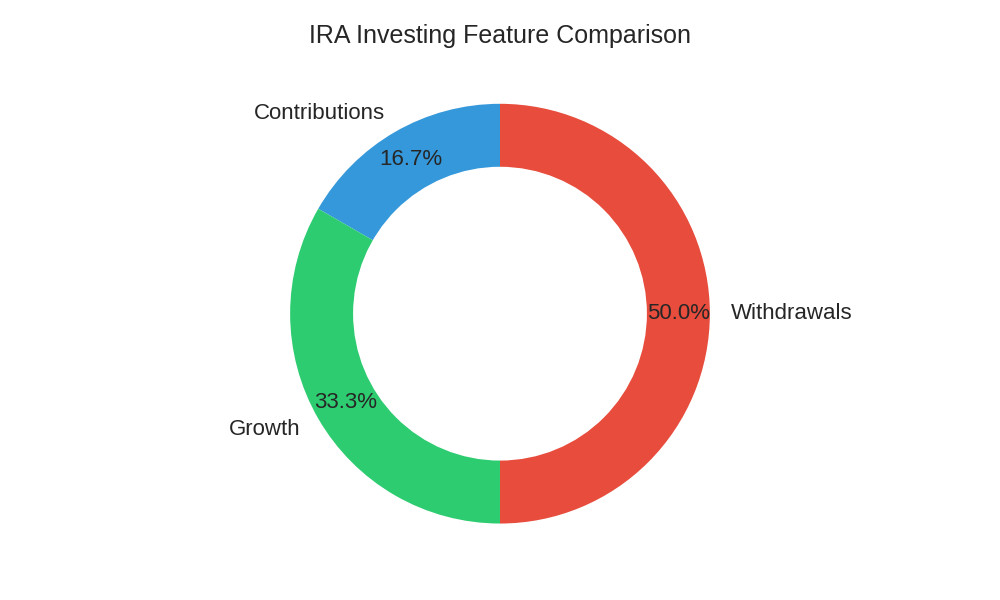
Here’s a quick comparison of the main features:
| Feature | Traditional IRA | Roth IRA |
|---|---|---|
| Contributions | Often tax-deductible | After-tax (not deductible) |
| Growth | Tax-deferred | Tax-free |
| Withdrawals (Retirement) | Taxable | Tax-free (qualified) |
Which One is Right for You?
Consider your income today versus what you expect in retirement. If you are currently in a high tax bracket and anticipate a lower one in retirement, a Traditional IRA might be more advantageous. The upfront tax deduction can save you money now.
Conversely, if you are currently in a lower tax bracket, or if you believe your income (and thus tax bracket) will be higher in retirement, a Roth IRA is often the better choice. Paying taxes now at a lower rate to enjoy tax-free growth and withdrawals later can be incredibly powerful. For example, a young professional just starting their career often benefits greatly from a Roth IRA.
Contribution Limits and Eligibility
Both Traditional and Roth IRAs have annual contribution limits, which can change year by year. For instance, in 2023 and 2024, the maximum contribution for those under 50 was [VERIFY_STAT – typically $6,500-$7,000], with an additional catch-up contribution for those aged 50 and over. Roth IRAs also have income limitations for direct contributions. If your modified adjusted gross income (MAGI) exceeds a certain threshold, you might not be able to contribute directly to a Roth IRA, though backdoor Roth conversions are sometimes an option. Always check the latest IRS guidelines for the most current figures.
How to Start IRA Investing: A Step-by-Step Guide
Starting your IRA investing journey is simpler than you might think. Follow these steps to set up your account and begin building wealth.
Smart Investment Choices for Your IRA
The beauty of an IRA is the freedom to choose your investments. Making smart choices is key to maximizing your returns and managing risk.
Diversification Explained
Diversification is the strategy of spreading your investments across various assets to minimize risk. Why does this matter? Imagine you put all your money into one company’s stock. If that company struggles, your entire investment is at risk. By diversifying, say, across different industries, asset classes (stocks, bonds), and geographies, the poor performance of one investment is less likely to severely impact your overall portfolio.
A well-diversified portfolio might include a mix of large-cap stocks, small-cap stocks, international stocks, and various types of bonds. This strategy helps protect your capital and ensures more consistent returns over time.
Common IRA Investment Options
- Stocks: Shares of ownership in individual companies. They offer potential for high growth but come with higher risk.
- Bonds: Loans to governments or corporations that pay interest. Generally lower risk than stocks, providing stability and income.
- Mutual Funds: Professionally managed portfolios of stocks, bonds, or other investments. They offer instant diversification and are suitable for hands-off investors.
- Exchange-Traded Funds (ETFs): Similar to mutual funds but trade like stocks on an exchange. Often have lower fees than mutual funds and offer great flexibility.
The Power of Compound Growth: A Long-Term View
Compound growth, often called “interest on interest,” is the secret sauce behind long-term wealth building. It means that the earnings on your investments also start earning their own returns. This snowball effect is particularly powerful in tax-advantaged accounts like IRAs.
How Compound Interest Works
When your investment earns a return, that return is then added to your original principal. The next time your investment earns, it’s calculated on this new, larger principal. Over decades, this small increase in principal each year leads to exponential growth. It’s why starting early with IRA investing is so critical.
Compound Growth Scenario
Consider an initial investment of $10,000 with additional annual contributions of $5,000, earning an average annual return of 7%.
| Time Horizon | Total Contributions | Estimated Portfolio Value |
|---|---|---|
| Year 5 | $35,000 | $40,000 – $45,000 |
| Year 10 | $60,000 | $80,000 – $90,000 |
| Year 20 | $110,000 | $220,000 – $250,000 |
(These are illustrative examples and not guaranteed returns. Investment values can fluctuate.)
Calculating Your IRA Growth Potential
Understanding how your IRA might grow can be motivating. While precise future returns are impossible to predict, you can estimate potential growth based on your contributions and an assumed average annual return.
To get a rough idea, you can think of it like this: Start with your initial investment. Add any new money you put in each year. Then, apply a reasonable growth rate, perhaps 5% to 8% annually, to that total. Keep adding your contributions and applying the growth rate year after year. The key is that the growth applies to the previous year’s total, not just your initial money. This step-by-step increase is how compounding works over time.
IRA Investing Growth Projector
Common Mistakes to Avoid in IRA Investing
While IRAs are powerful, certain missteps can hinder your progress.
- Not Starting Early: The biggest mistake is delaying your investments. Compound interest thrives on time, so every year you wait means missing out on significant growth potential.
- Ignoring Diversification: Putting all your eggs in one basket can expose you to unnecessary risk. Always spread your investments across different asset classes and sectors.
- Not Maximizing Contributions: If you can afford it, try to contribute the maximum allowed each year. This accelerates your wealth building and maximizes your tax benefits.
- Panic Selling: Market downturns are a normal part of investing. Selling your investments during a dip locks in your losses and prevents you from benefiting when the market recovers. Stay the course with a long-term perspective.
- Forgetting to Rebalance: Over time, some investments might grow more than others, throwing your portfolio out of your desired allocation. Regularly rebalancing ensures you maintain your intended risk level. You can learn more about managing your investments through resources like FINRA.org.
FAQ: Your IRA Investing Questions Answered
Can I have both a Traditional and Roth IRA?
Yes, you can contribute to both a Traditional and a Roth IRA in the same year. However, your total contributions across all IRAs cannot exceed the annual contribution limit for that year. For example, if the limit is $7,000, you could put $3,500 in a Traditional IRA and $3,500 in a Roth IRA.
What if I need my money before retirement? (Early withdrawal penalties)
Generally, if you withdraw money from your Traditional or Roth IRA before age 59½, you may face a 10% early withdrawal penalty, in addition to income taxes on Traditional IRA withdrawals. There are some exceptions, such as for first-time home purchases, qualified education expenses, or certain medical expenses. Roth IRA contributions can typically be withdrawn tax and penalty-free at any time, but earnings may be subject to penalties if withdrawn early.
Are there income limits for Roth IRAs?
Yes, there are income limitations for direct contributions to a Roth IRA. If your modified adjusted gross income (MAGI) is above a certain threshold, you might not be eligible to contribute directly. These limits are adjusted annually, so it’s essential to check the latest IRS guidelines. High earners may explore a “backdoor Roth IRA” strategy.
Can I roll over an old 401(k) into an IRA?
Absolutely! Rolling over an old 401(k) from a previous employer into an IRA is a common and often beneficial strategy. This gives you more control over your investment options and typically consolidates your retirement savings into one account. You can roll it into a Traditional IRA (tax-free transfer) or a Roth IRA (which would be a taxable conversion).
Conclusion
IRA investing is a proven path to long-term financial security and wealth accumulation. By understanding the types of IRAs, making informed investment choices, and leveraging the power of compound interest, you can significantly enhance your retirement outlook. Don’t underestimate the impact of consistent contributions and smart investment decisions over time.
Ready to Secure Your Future?
The best time to start IRA investing was yesterday; the second best time is today. Take the first step by researching brokerage firms, opening an account, and setting up your initial contributions. If you’re unsure about specific investment strategies or tax implications, consider consulting with a qualified financial advisor to tailor a plan that fits your unique goals. Your future self will thank you.
Disclaimer: The information provided in this article is for educational purposes only and does not constitute financial advice.