

Are you tired of watching your hard-earned money vanish into ever-increasing car insurance premiums? You’re not alone. Many drivers feel trapped, paying what feels like an arbitrary amount for their auto coverage. But here’s the truth: you have far more control than you think over what you pay for car insurance. This year, don’t let inertia cost you. It’s time to become an advocate for your own wallet and significantly cut down your car insurance expenses.
As a seasoned financial strategist, I’ve seen countless individuals overpay because they simply don’t know the insider tricks. You’re about to learn how to aggressively reduce your premiums without sacrificing essential protection. Forget generic advice; we’re diving deep into actionable strategies that will help you save real money on your next car insurance bill.

Stop Overpaying: The Real Deal on Rates
The biggest myth in the car insurance world is that “loyalty pays.” While some insurers offer small longevity discounts, staying with the same company for years without comparison shopping is almost guaranteed to make you overpay. Insurers often reserve their best rates for new customers, hoping existing ones won’t notice or bother to switch.
The Power of Shopping Around Annually
Insider Tip: You should compare car insurance quotes at least once a year, or whenever your policy is up for renewal. Don’t wait for your rates to spike; be proactive. Even if you’re happy with your current insurer, see what competitors offer. You might be surprised.
Scenario: Imagine your friend, Sarah, has been with “Reliable Auto Co.” for seven years, paying $1,800 annually for her car insurance. Meanwhile, you, after just two years with “Swift Drive Insurance,” decide to shop around. You find “Peak Protection” offers the exact same coverage for $1,300 a year. That’s a $500 annual saving just for taking an hour to compare. Sarah’s loyalty cost her thousands over the years. Why does this matter in real life? Because that $500 could go into savings, debt repayment, or a well-deserved vacation.
Uncover Hidden Discounts You’re Missing
Insurance companies offer a surprising array of discounts, but they don’t always advertise them aggressively. It’s your job to ask and ensure you’re getting every possible reduction. Many people miss out simply because they don’t know what to request.
- Bundling: This is one of the most significant discounts. If you have homeowners, renters, or even life insurance, combine it with your auto policy through the same provider. This can often slash your premium by 10% to 25% across all policies.
- Good Driver/Telematics: Many insurers offer discounts for safe driving, often tracked by a small device plugged into your car or an app on your phone. If you’re a careful driver, this can lead to substantial savings, sometimes up to 30%.
- Low Mileage: Do you work from home or use public transport frequently? If you drive fewer miles than the average person (e.g., under 7,500 miles annually), you could qualify for a low-mileage discount.
- Good Student: If you have a young driver on your policy who maintains a ‘B’ average or better, inquire about a good student discount.
- Defensive Driving Courses: Completing an approved defensive driving course can sometimes earn you a discount, especially if you’re a senior driver or have recent infractions.
- Vehicle Safety Features: Anti-lock brakes, airbags, anti-theft systems, and even daytime running lights can reduce your premium. Make sure your insurer knows about all your car’s safety features.

Common Myths to Avoid
Myth: My current agent will automatically apply all available discounts.
Reality: While good agents try, they don’t always know every single detail of your life or proactively apply every obscure discount. You need to be proactive and ask for a comprehensive review of all potential discounts annually. Always ask, “What other discounts am I eligible for?”
Optimize Your Coverage, Not Just Your Premium
Saving money isn’t just about lowering the number; it’s about paying for what you genuinely need and not a penny more. This requires understanding your policy components and making smart choices about deductibles and coverage limits.
Adjusting Your Deductible
Your deductible is the amount you pay out of pocket before your insurance kicks in after a claim. A higher deductible typically means a lower premium. For example, moving from a $500 deductible to a $1,000 deductible could save you 10-20% on your comprehensive and collision coverage.
Real-life Example: Consider a vehicle worth $5,000. If you have a $1,000 deductible, the insurer pays $4,000 max. If your car is older and worth, say, only $2,000, paying a high premium for a $500 deductible might not make sense. You could be paying $300-$400 more per year in premiums just to save $500 on a claim for a car that might be totaled. Assess the market value of your car versus your deductible and premium savings. This is critical for smart car insurance decisions.
Dropping Unnecessary Coverage
If you have an older car that’s fully paid off and has a low market value (e.g., under $3,000-$4,000), you might consider dropping collision and comprehensive coverage. These cover damage to your own vehicle. If your car’s value is less than the annual premium for these coverages plus your deductible, it might be more cost-effective to self-insure (i.e., save the premium money and be prepared to pay for repairs or a replacement out of pocket).
For more detailed information on understanding your auto policy, you can consult resources like the National Association of Insurance Commissioners (NAIC) website.
How to Calculate Your Potential Savings
Calculating your potential savings primarily involves comparing quotes, but it’s more than just looking at the bottom line. You need to compare apples to apples regarding coverage, deductibles, and included benefits. Here’s a plain-language approach:
- Gather Your Current Policy Details: Have your current policy handy, noting your liability limits (e.g., 100/300/50), deductibles for comprehensive and collision, and any extra coverages like roadside assistance or rental car reimbursement.
- Get Multiple Quotes: Use online comparison tools or contact at least 3-5 different insurers directly. Provide the exact same coverage details you have now for an accurate comparison.
- Compare Premium vs. Deductible Changes: If a new insurer offers a significantly lower premium with the same coverage, that’s a direct saving. If you’re considering raising your deductible, compare the premium reduction against the increased out-of-pocket risk. For instance, if increasing your deductible from $500 to $1,000 saves you $200 per year, it would take 2.5 years of savings to offset that extra $500 you’d pay in a claim. You need to decide if that trade-off is worth it for you.
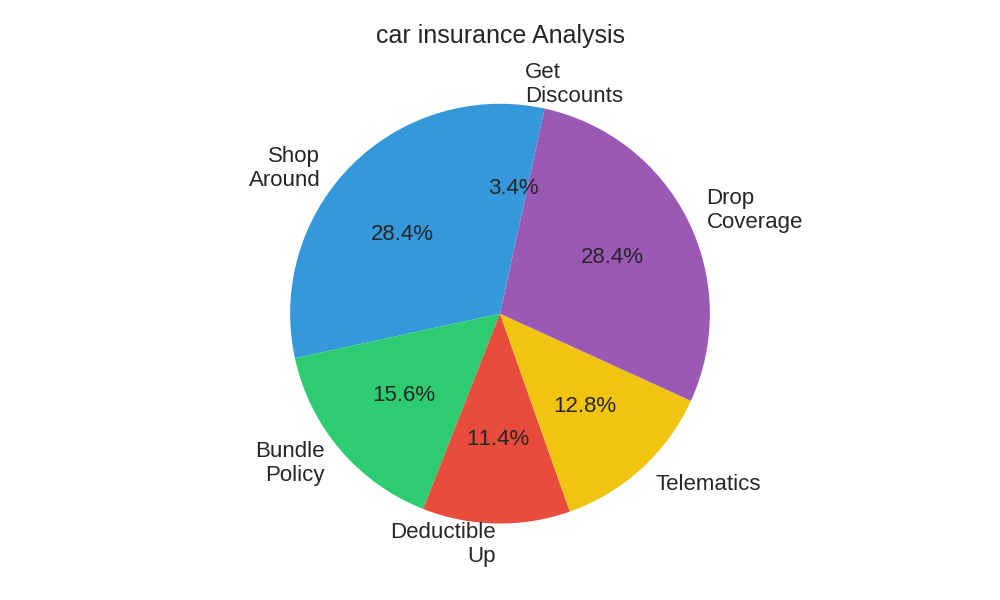
Your Potential Car Insurance Savings
This systematic comparison helps you see the actual financial impact of your choices. Remember, the goal is not just a lower premium, but optimal value for your specific situation. This due diligence can easily save you hundreds annually.
| Saving Strategy | Estimated Annual Savings (Range) | Effort Level |
|---|---|---|
| Shop Around Annually (3-5 insurers) | $200 – $800+ | Medium (1-2 hours) |
| Bundle Home/Auto Policies | $150 – $400 | Low (1 phone call) |
| Increase Deductible ($500 to $1000) | $100 – $300 | Low (Policy adjustment) |
| Utilize Telematics/Safe Driver Program | $50 – $400 | Medium (Driving observation) |
| Drop Collision/Comp (Older Car) | $300 – $700+ | Medium (Risk assessment) |
| Claim All Eligible Discounts | $20 – $100+ (per discount) | Low (Ask questions) |
This table illustrates that combining several strategies can lead to significant cumulative savings on your car insurance. For more consumer insights and financial tips, consider resources like Consumer Reports, which often provides unbiased reviews and cost-saving advice.

The Impact of Your Credit Score
Here’s another insider tip many people overlook: your credit score plays a significant role in your car insurance premiums in most states (California, Hawaii, and Massachusetts are exceptions). Insurers use credit-based insurance scores as a predictor of how likely you are to file a claim. Generally, a higher credit score can translate to lower premiums.
Proactive Credit Management
Why this matters in real life: Maintaining a strong credit score isn’t just for loans or mortgages; it directly impacts your insurance costs. If your credit score has recently improved, it’s worth getting new quotes, as you might now qualify for better rates. Conversely, if you’re working to improve your credit, know that your efforts could lead to savings on car insurance down the line. You can monitor your credit score through various free services or by checking your credit report annually. Understanding and improving your credit can be a powerful lever for reducing many of your household expenses, not just insurance. For further guidance on managing your credit, reputable financial sites like NerdWallet offer comprehensive guides.
Conclusion: Take Control of Your Car Insurance Costs
You now have the tools and insider knowledge to stop overpaying for car insurance. This isn’t about cutting corners on protection; it’s about smart financial planning and being an informed consumer. The difference between an average premium and a truly optimized one can add up to hundreds, even thousands, of dollars over a few years.
Call to Action: Don’t wait. Open your current car insurance policy right now. In the next 24-48 hours, commit to getting at least three new quotes from different providers, reviewing your deductibles, and specifically asking about every discount mentioned here. Your wallet will thank you. Take control, save money, and drive smarter this year.
Disclaimer: The information provided in this article is for educational purposes only and does not constitute financial advice.