

You’re here because you know there’s a better way to buy car insurance. You’re tired of overpaying, baffled by jargon, and suspecting there are savings you’re missing out on. Good news: you’re right. As a financial strategist, I see it constantly – people leaving hundreds, sometimes thousands, on the table by not understanding the power of direct auto insurance online.
Forget the generic advice. This isn’t about just getting a quote; it’s about strategically finding huge savings with direct auto insurance and feeling confident in your coverage. We’re cutting through the noise to get you to an immediate decision.

Why You’re Likely Overpaying (and How to Stop)
Let’s be blunt: if you’re not actively comparing direct auto insurance quotes online, you are almost certainly paying too much. Traditional insurance models often include overhead for agents, physical offices, and elaborate marketing campaigns. Guess who foots that bill? You do.
Insider Tip: Direct insurers cut out the middleman. This isn’t a minor tweak; it’s a fundamental shift that can translate into significant savings on your annual premium. Imagine shaving off anywhere from $100 to $500 per year just by changing how you buy your policy.
Why this matters in real life: That’s money that stays in your pocket for gas, groceries, or even a weekend getaway, rather than lining the pockets of a broker for a service you can easily do yourself online. It’s about being an empowered consumer.
Myth Buster: “Cheaper Means Worse Coverage”
One of the biggest fears I hear is that if it’s cheaper, the coverage must be inferior. This is a common myth propagated by those who benefit from higher-priced policies. With direct online insurers, you’re often getting the exact same underwriting, the same claim adjusters, and the same policy types as their agent-based counterparts.
Pro/Con Analysis:
- Direct Online Insurance (Pros):
- Potentially lower premiums due to reduced overhead.
- Convenience of 24/7 online access to quotes, policy management, and claims.
- Full control over the comparison and purchase process.
- Agent-Based Insurance (Cons, comparatively):
- Often higher premiums to cover agent commissions and physical office costs.
- Less control over the initial quote comparison, relying on one agent’s offerings.
- May involve more time and appointments for policy changes.
The key takeaway here is that you’re buying the same product, just through a more efficient channel. Don’t let fear of “too good to be true” stop you from saving.
The Online Advantage: Speed, Transparency, Control
The beauty of buying online is the sheer speed and transparency. No more waiting for callbacks or sitting through sales pitches. You input your details, and within minutes, you have multiple quotes laid out clearly.
Mini Case Study: Meet Sarah. She spent 15 minutes online, comparing quotes from three different direct insurers. Her previous policy, bought through an agent, was costing her $1,800 annually. She found a policy with identical coverage limits and deductibles for $1,350. That’s a $450 saving in less than 20 minutes!
Why this matters in real life: This isn’t just about saving money; it’s about saving time and empowering you with instant access to information. You have all the data at your fingertips to make an informed decision on the spot.
Unlocking the Best Deals: Insider Strategies
To truly maximize your savings with direct auto insurance, you need to be strategic. Here are the plays that seasoned financial strategists recommend:
- Bundle Smart: Many direct insurers offer discounts if you bundle your auto policy with home, renters, or even life insurance. Always check these options.
- Leverage Discounts: Don’t just look at the base price. Check for specific discounts:
- Good driver discounts (no accidents/tickets)
- Good student discounts
- Multi-car discounts
- Safety features (anti-theft, airbags)
- Low mileage discounts
- Payment history (paying in full or setting up auto-pay)
- Compare, Compare, Compare: This is non-negotiable. Use at least 3-5 different online quoting tools. Never settle for the first quote you get.
Common Myth to Avoid: Believing your current insurer will automatically give you the best deal because you’re a loyal customer. Loyalty rarely pays off in insurance without you actively prompting it or threatening to leave. Always shop around!

How to Calculate Your Potential Savings
Calculating your potential savings isn’t rocket science, but it requires a structured approach. You’re essentially comparing “apples to apples” – ensuring you’re looking at policies with the same coverage limits, deductibles, and endorsements.
First, gather your current policy’s Declarations Page. This document clearly lists all your coverage types, limits (e.g., $100,000 bodily injury per person, $300,000 per accident), and deductibles (e.g., $500 comprehensive, $1,000 collision). Then, when you get quotes from direct insurers online, input these exact figures.
Once you have 3-5 comparable quotes, simply subtract the lowest quote from your current annual premium. That difference is your immediate potential saving. Don’t forget to factor in any unique discounts offered by each insurer that might further reduce the price without sacrificing coverage.
For example, if your current policy costs $1,500 annually, and a direct insurer offers the exact same coverage for $1,200, your potential savings are $300. It’s that straightforward.
Calculate Your Direct Auto Insurance Savings
Beyond Price: What Else to Look For in Direct Auto Insurance
While price is a massive factor, it’s not the only one. A cheap policy isn’t a good deal if the claims process is a nightmare or the company is financially unstable. Here’s what else to consider:
- Customer Service: How easy is it to reach a representative? Do they offer 24/7 support for claims? Check online reviews for their responsiveness.
- Claims Process: A seamless claims process is crucial after an accident. Look for insurers with strong digital tools for filing and tracking claims. Companies with a reputation for quick and fair payouts are always better.
- Financial Stability: This tells you if the company can pay out large claims. You can check ratings from independent agencies like A.M. Best. A financially sound insurer means peace of mind. You can research company ratings through resources like the Insurance Information Institute.
- User Experience: How easy is their website or app to use for managing your policy, making payments, or getting ID cards?
Why this matters in real life: A minor fender bender can become a major headache if your insurer has poor customer service. Think of your insurance as a safety net; you want to be confident it will hold when you need it most. Ensuring the company is rated well for stability and service is just as important as the price.
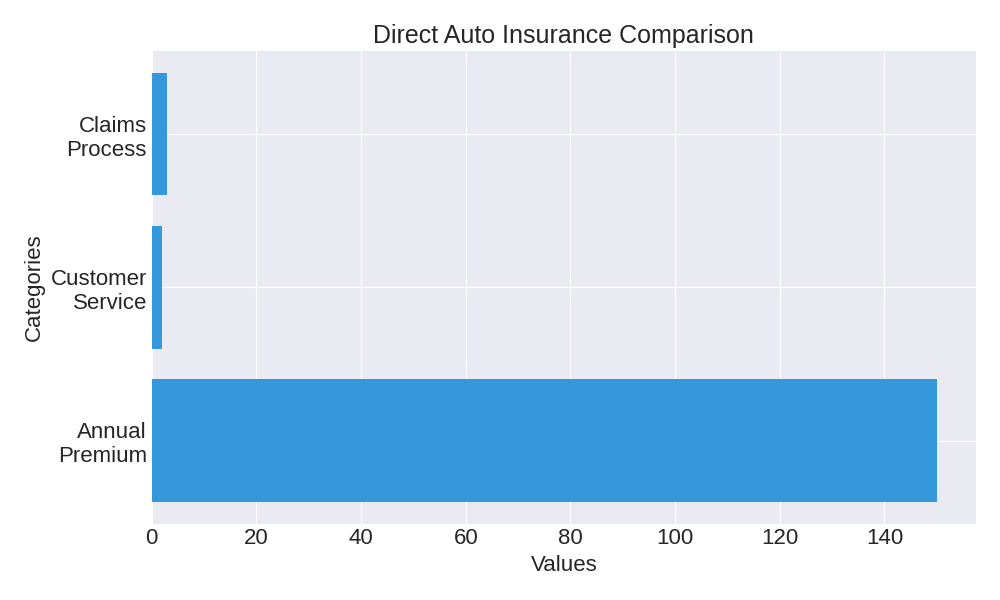
Here’s a comparison scenario to help you weigh options:
| Factor | Direct Insurer A (Hypothetical) | Direct Insurer B (Hypothetical) | Why it Matters for You |
|---|---|---|---|
| Annual Premium (Similar Coverage) | $1,100 – $1,300 | $1,250 – $1,450 | Direct cost impact on your budget. |
| Customer Service Rating (1-10) | 8 | 6 | Ease of getting help, especially during a crisis. |
| Claims Processing Speed | Very Fast (2-3 days average) | Average (5-7 days average) | Getting your car fixed quickly after an incident. |
| Online/App Tools | Excellent (policy management, claims, roadside) | Good (basic policy access) | Convenience for managing your policy on the go. |
| Available Discounts | Multi-policy, good driver, low mileage, telematics | Multi-policy, good driver | Opportunities to further reduce your premium. |
Understanding these aspects ensures you’re not just getting the cheapest policy, but the best value for your money and peace of mind. Keeping up to date with vehicle safety ratings from sources like the National Highway Traffic Safety Administration can even influence your premiums.

Conclusion: Your Savings are Waiting
The days of passively accepting your auto insurance premium are over. You now have the knowledge and the power to take control. Direct auto insurance offers a clear path to significant savings without compromising on coverage quality.
By bypassing traditional channels, leveraging online tools, and understanding what truly matters beyond just the price tag, you can secure a better deal and a more confident driving experience.
It’s time to act.
Call to Action
Don’t wait another billing cycle to save. Open a new tab right now and begin comparing direct auto insurance quotes. Use your current policy as a guide, look for those vital discounts, and ensure you’re getting robust coverage from a reliable provider. Your wallet will thank you!
Disclaimer: The information provided in this article is for educational purposes only and does not constitute financial advice.