

Investing Airbnb has emerged as a compelling avenue for those seeking to generate passive income and build long-term wealth. In today’s dynamic real estate market, leveraging short-term rentals through platforms like Airbnb offers a unique blend of flexibility and profitability, distinguishing it from traditional long-term rentals. This comprehensive guide will demystify the process, providing you with actionable insights to successfully navigate the world of Airbnb investing.
At its core, investing Airbnb involves acquiring a property and renting it out on a short-term basis to travelers. The goal is to generate higher rental income than traditional leases, covering operational costs, mortgage payments, and ultimately creating a positive cash flow. While the potential for substantial returns is attractive, success hinges on meticulous planning, market analysis, and effective property management. We’ll explore everything from finding the right property to optimizing your listings and understanding the financial intricacies.

The Appeal of Airbnb Investment: A Summary
Investing in Airbnb properties can offer significant financial advantages, including potentially higher rental yields compared to traditional long-term leases, tax benefits, and property appreciation. It allows for greater flexibility in property use and pricing, adapting to market demand. However, it also demands active management, adherence to local regulations, and careful financial planning to mitigate risks and maximize profitability.
Understanding the Airbnb Investment Model
What is Short-Term Rental Investment?
Short-term rental investment is the practice of purchasing residential property with the explicit intent of renting it out for brief periods, typically through platforms like Airbnb. This model contrasts sharply with long-term rentals, which involve leases of six months or more. The allure lies in the ability to charge a premium nightly rate, which can accumulate to a much higher monthly income than standard rent.
Key Advantages and Disadvantages
- Higher Income Potential: Short-term rentals often generate more revenue than traditional rentals, especially in tourist hotspots or areas with high demand for temporary accommodation.
- Flexibility: Owners can block out dates for personal use or adjust pricing based on seasonal demand, events, or market fluctuations.
- Property Appreciation: Like any real estate investment, the property itself can appreciate in value over time, adding to your overall wealth.
- Tax Benefits: Various expenses related to property operation and ownership can be tax-deductible. Consult a tax professional for personalized advice. For general information on tax requirements for rental income, you can visit the Internal Revenue Service website.
- Increased Wear and Tear: Higher guest turnover can lead to more maintenance and cleaning costs.
- Regulatory Challenges: Many cities have introduced strict regulations, permits, and taxes on short-term rentals. It’s crucial to research local laws through your city or county government portal.
- Income Volatility: Occupancy rates can fluctuate significantly with seasons, economic changes, and unforeseen events, impacting cash flow.
- Time Commitment: Managing bookings, guest communication, cleaning, and maintenance can be demanding, often requiring a dedicated property manager.
Your Step-by-Step Guide to Airbnb Investing
- Market Research and Location Selection:
Identify areas with high tourism, business travel, or unique attractions. Look for neighborhoods with strong amenities, good transport links, and a track record of short-term rental demand. Analyze average nightly rates and occupancy percentages for comparable properties.
- Financial Planning and Funding:
Determine your budget, including property purchase price, renovation costs, furnishing, and initial operating capital. Explore financing options such as conventional mortgages, FHA loans, or investor loans. A solid financial plan is the cornerstone of successful investing Airbnb.
- Legal and Regulatory Compliance:
This is paramount. Research local zoning laws, short-term rental ordinances, permit requirements, and taxation. Some cities have outright bans or strict limits. Failure to comply can result in hefty fines. Check resources like the U.S. Department of Housing and Urban Development for broader housing regulations, though specific Airbnb rules are municipal.
- Property Acquisition:
Work with a real estate agent experienced in investment properties. Consider factors like property condition, potential for renovations, and layout suitable for guests. Focus on properties that offer strong potential for a high return on investment.
- Furnishing and Setup:
Furnish your property to be comfortable, aesthetically pleasing, and functional. Think about amenities guests expect, such as high-speed internet, smart TVs, fully equipped kitchens, and quality bedding. Professional photography is essential for compelling listings.
- Listing Creation and Optimization:
Craft an engaging listing description highlighting your property’s unique features. Set competitive pricing, utilizing dynamic pricing tools if available. Respond promptly to inquiries and maintain excellent guest communication to secure positive reviews.
- Property Management:
Decide whether to self-manage or hire a professional property management company. Self-management saves costs but demands significant time. A good manager handles bookings, guest communication, cleaning, and maintenance, albeit for a fee (typically 15-25% of gross revenue).

How to Calculate Your Potential Airbnb Profitability
Understanding the financial viability of an Airbnb investment requires careful calculation of potential income versus all associated expenses. This isn’t just about nightly rates; it’s about the bigger picture.
First, estimate your potential Gross Annual Revenue. You can do this by multiplying your estimated average nightly rate by the number of nights you expect the property to be booked annually (your occupancy rate). For example, if you charge an average of $150 per night and expect to be booked 20 nights a month (240 nights a year), your gross annual revenue would be $150 multiplied by 240, which equals $36,000.
Next, list all your Annual Expenses. These typically include:
- Mortgage payments (principal and interest)
- Property taxes
- Homeowner’s insurance (and potentially specific short-term rental insurance)
- Utilities (electricity, water, gas, internet)
- Cleaning fees (paid to cleaners after each guest)
- Maintenance and repairs budget
- Supplies (toiletries, coffee, linens)
- Airbnb host fees (typically 3%)
- Property management fees (if applicable, e.g., 20% of gross revenue)
- Marketing and listing optimization costs
Add up all these annual expenses. Let’s say your total annual expenses amount to $25,000.
To find your Net Operating Income (NOI), simply subtract your total annual expenses from your gross annual revenue. Using our example: $36,000 (Gross Revenue) minus $25,000 (Total Expenses) equals $11,000 (NOI).
Finally, you can assess your Cash-on-Cash Return. This measures the annual pre-tax cash flow against the total cash invested. If your initial investment (down payment, closing costs, renovation, furnishing) was $100,000, and your NOI is $11,000, then your cash-on-cash return would be $11,000 divided by $100,000, which results in 0.11 or 11%. This metric helps evaluate the efficiency of your invested capital.
Monthly Payment Calculator
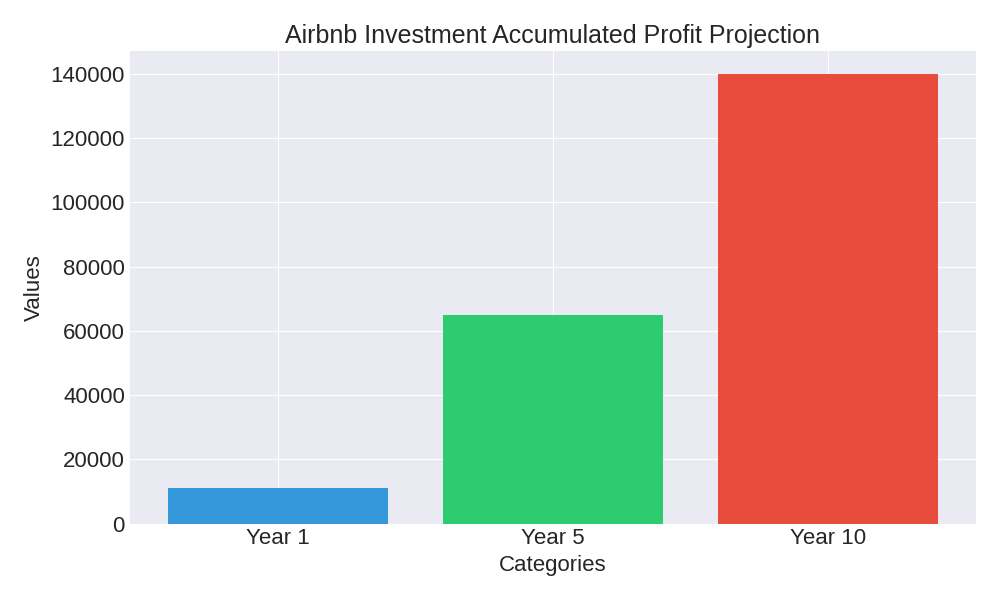
Long-Term Value: Projected Annual Net Profit
While immediate cash flow is vital, considering the long-term growth potential adds another layer to your investment strategy. Property value appreciation and optimized operations can significantly increase your net profits over time. Below is a simplified projection demonstrating this potential:
| Year | Annual Net Profit (Estimated) | Total Accumulated Profit (Estimated) |
|---|---|---|
| 1 | $11,000 | $11,000 |
| 5 | $14,500 | $65,000 |
| 10 | $19,000 | $140,000 |
Note: These figures are illustrative and do not account for inflation, significant market changes, or specific tax implications. Actual results will vary. For a deeper dive into investment metrics, sites like Investopedia offer excellent resources on concepts like CAP Rate and ROI.

Frequently Asked Questions (FAQ)
Is investing in Airbnb still profitable?
Yes, but profitability is highly dependent on location, market demand, effective management, and adherence to local regulations. While some markets are saturated, others continue to offer strong returns, especially with unique properties or exceptional guest experiences.
What are the biggest risks of investing in Airbnb?
The primary risks include fluctuating occupancy rates, unexpected maintenance costs, changes in local short-term rental regulations, competition, and potential issues with difficult guests. Thorough research and a contingency fund are crucial.
How much time does managing an Airbnb take?
Self-managing an Airbnb can be demanding, requiring several hours per week for guest communication, cleaning coordination, and maintenance. Many investors opt for property management companies to save time, though this reduces net profit.
Do I need special insurance for an Airbnb?
Yes, standard homeowner’s insurance typically does not cover short-term rental activities. You will likely need a specific landlord policy or commercial short-term rental insurance to adequately protect your investment from risks like guest damage or liability claims.
Can I invest in Airbnb without owning property?
Yes, strategies like “rental arbitrage” involve leasing a property long-term and then subleasing it on Airbnb. This often requires explicit permission from the landlord. Another option is co-hosting, where you manage properties for other owners.
Conclusion: Your Path to Passive Income
Investing Airbnb offers a promising route to building wealth and generating passive income, provided you approach it with diligence and an informed strategy. From pinpointing the ideal location to mastering financial calculations and navigating legal landscapes, each step is crucial. While challenges exist, the rewards of a well-managed short-term rental property can be substantial.
Ready to Unlock Your Investment Potential?
Start your journey today by researching promising locations and understanding the regulatory environment. Begin building your financial model and consider speaking with real estate professionals and financial advisors specializing in short-term rentals. With careful planning and execution, your Airbnb investment can become a thriving source of income and a valuable asset in your portfolio.
Disclaimer: The information provided in this article is for educational purposes only and does not constitute financial advice.