

Gold has long been revered as a store of value and a safe-haven asset, especially during times of economic uncertainty. For modern investors, investing gold ETF offers an accessible and efficient way to gain exposure to this precious metal without the complexities of physical ownership. This comprehensive guide will explain how Gold Exchange-Traded Funds (ETFs) work, why they can be a crucial component of your portfolio, and how to intelligently incorporate them into your wealth-building strategy. By the end, you’ll understand the nuances of these smart funds and be equipped to make informed decisions about your financial future.

What is a Gold ETF (Exchange-Traded Fund)?
A Gold ETF is an investment fund that holds physical gold or gold-related assets, but trades on stock exchanges like a regular stock. When you buy shares of a Gold ETF, you’re essentially buying a piece of a larger pool of gold. This means you get the price exposure of gold without having to buy, store, or insure actual gold bars or coins yourself.
For example, imagine a large, secure vault filled with gold bars, owned by a fund manager. Instead of you personally buying a tiny piece of a gold bar and trying to put it in your home safe, you buy a share of a company that owns many such gold bars in that vault. You can buy and sell these shares easily throughout the day, just like stocks in companies such as Apple or Google. This matters in real life because it dramatically increases the accessibility and liquidity of gold as an investment.
Why Consider Investing in Gold ETFs?
Integrating gold into your investment strategy through ETFs can offer several distinct advantages, making it an attractive option for diversifying and safeguarding your wealth.
Portfolio Diversification and Stability
Gold often moves independently, or even inversely, to traditional assets like stocks and bonds. This unique characteristic makes it a powerful tool for diversification. When stock markets experience downturns, gold prices sometimes rise, helping to buffer your overall portfolio against significant losses.
Imagine a scenario where the stock market drops by 15% in a single year. An investor whose portfolio is purely in stocks would feel the full impact of that decline. However, an investor who allocated 10% of their portfolio to gold ETFs might find that their gold holdings increased by 5-10% during the same period, thereby partially offsetting the stock market losses and reducing the overall portfolio decline. This matters because it provides a crucial layer of stability, protecting your capital when other investments are struggling.
Hedge Against Inflation and Economic Uncertainty
Historically, gold has served as an excellent hedge against inflation. When the purchasing power of fiat currencies (like the US dollar) diminishes due to rising prices, gold tends to hold its value or even increase. This is because gold is a finite resource, not subject to quantitative easing or government policy decisions.
Consider a time when the Consumer Price Index (CPI) is rising rapidly, indicating high inflation. The cash sitting in your savings account is losing value every day. However, your investment in a gold ETF might see its value increase, helping to preserve your purchasing power. This matters in real life as it ensures your wealth isn’t silently eroded by economic forces beyond your control.
Liquidity and Cost-Effectiveness
Unlike physical gold, which can be cumbersome to buy, sell, and store, Gold ETFs offer high liquidity. You can buy and sell shares throughout the trading day at market prices. Furthermore, the costs associated with Gold ETFs are generally much lower than those of buying, storing, and insuring physical gold. There are no assaying fees, transportation costs, or high storage charges.
This matters because it means you can quickly convert your gold exposure into cash if needed, and you avoid the logistical headaches and significant expenses tied to managing physical bullion. For a typical investor, the ease and lower cost make investing gold ETF a superior choice over physical gold.

Understanding the Types of Gold ETFs
Not all Gold ETFs are created equal. Knowing the difference is key to choosing the right fund for your investment goals.
Physical Gold-Backed ETFs
These are the most common and straightforward type. They hold actual gold bullion in secure vaults, often audited by third parties. Each share typically represents a fractional ownership interest in a specific amount of gold, such as one-tenth or one-hundredth of an ounce. Their price closely tracks the spot price of gold.
Examples include popular funds like SPDR Gold Shares (GLD) or iShares Gold Trust (IAU). This matters for investors seeking direct, unadulterated exposure to gold’s price movements, as it removes the complexities of derivatives.
Gold Futures ETFs
Instead of holding physical gold, these ETFs invest in futures contracts, which are agreements to buy or sell gold at a predetermined price on a future date. These funds can be more complex due to factors like contango and backwardation (differences between spot and futures prices), which can impact returns over time.
While they provide exposure to gold price movements, their performance might deviate from the spot price more significantly than physical-backed ETFs, especially over longer periods. This matters because if you’re looking for simple exposure to gold’s price, physical-backed ETFs are generally preferred due to their more direct correlation and simpler structure.
How to Choose the Right Gold ETF
Selecting the ideal Gold ETF involves evaluating several key factors to ensure it aligns with your investment objectives and risk tolerance.
- Expense Ratio: This is the annual fee charged by the fund, expressed as a percentage of your investment. A lower expense ratio means more of your money stays invested and compounds over time. For example, if ETF A has an expense ratio of 0.20% and ETF B has 0.50%, on a $10,000 investment over 10 years, ETF A could save you several hundred dollars in fees, assuming similar performance.
- Tracking Error: This measures how closely the ETF’s price performance mirrors the actual price movement of gold. A low tracking error indicates that the fund is doing a good job of reflecting the underlying asset’s value.
- Liquidity and Trading Volume: Opt for ETFs with high trading volumes. This ensures you can easily buy or sell shares without significantly impacting the price and that you get fair market execution.
- Custody and Auditing (for Physical ETFs): For physical gold-backed ETFs, transparency regarding where the gold is stored, who the custodian is, and regular audit reports are crucial. Reputable funds provide this information, often on their websites. This matters because these factors directly impact your net returns and the safety of your investment, protecting you from hidden costs and potential risks.
Step-by-Step Guide to Investing Gold ETF
Ready to add gold exposure to your portfolio? Here’s a simple, actionable guide to get started with investing gold ETF.
- Open a Brokerage Account: If you don’t already have one, you’ll need an investment account with an online brokerage firm. Popular options include Fidelity, Charles Schwab, Vanguard, or Interactive Brokers. The process is usually quick and straightforward.
- Research Gold ETFs: Based on the criteria discussed above (expense ratio, tracking error, liquidity), identify 1-2 Gold ETFs that align with your investment philosophy. Look for well-established funds with a proven track record.
- Fund Your Account: Transfer money from your bank account to your brokerage account. This can typically be done via electronic funds transfer (ACH), wire transfer, or sometimes by mailing a check.
- Place Your Order: Once your account is funded, navigate to the trading platform. Search for the ticker symbol of your chosen Gold ETF (e.g., GLD or IAU). Decide how many shares you want to buy and place a market order (for immediate execution) or a limit order (to buy at a specific price).
- Monitor and Rebalance: Regularly review your portfolio’s performance. Gold’s role is often diversification, so ensure your allocation remains consistent with your overall investment strategy. Periodically rebalance if your gold allocation drifts significantly.
Imagine you’ve successfully opened an account, decided on a well-regarded Gold ETF, funded your account with, say, $2,000, and bought 10 shares. You’ve just integrated a powerful diversifier into your investment strategy with a few clicks, without ever touching a gold bar. This structured approach helps beginners confidently enter the market, making what seems complex into a manageable process.
Calculating Potential Returns and Costs
Understanding how potential returns are affected by fees and market movements is crucial for realistic expectations.
When you’re investing in a Gold ETF, your net return is essentially the performance of the underlying gold minus the fund’s expense ratio. For example, if the price of gold increases by an average of 6% in a year, and your chosen Gold ETF has an expense ratio of 0.25%, your actual return on investment for that year would be approximately 5.75%. Over many years, these small percentages can make a significant difference due to the power of compounding.
To estimate future growth, you would take your initial investment, apply an assumed annual growth rate for gold (e.g., 5-7% based on historical averages, but remember past performance doesn’t guarantee future results), and then subtract the annual expense ratio. This will give you a rough idea of how your investment might grow over time, accounting for the cost of management.
Investing Gold ETF Profit & Return Calculator
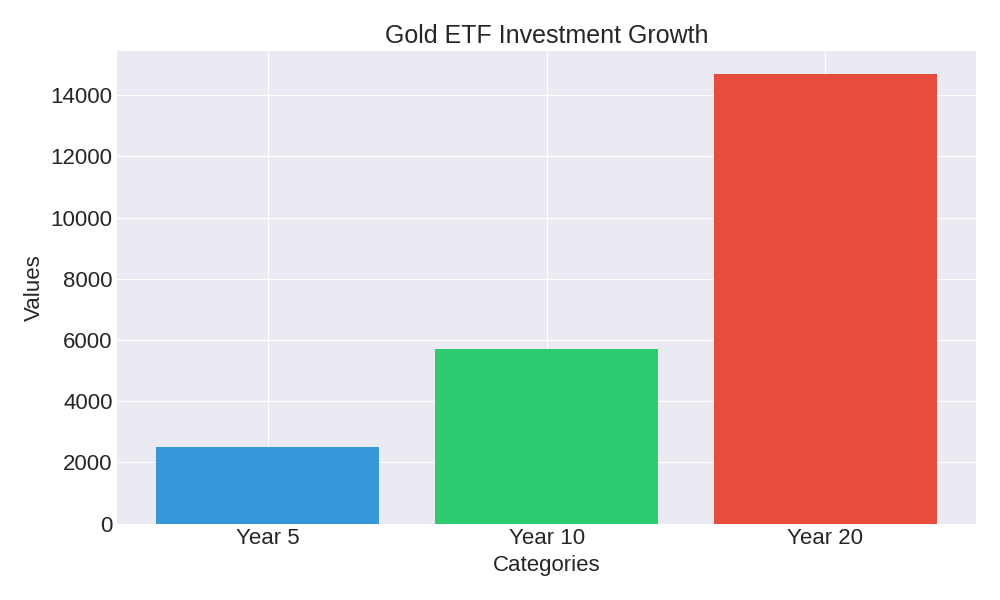
The following table illustrates a hypothetical compound growth scenario for a Gold ETF investment, showcasing how an initial investment might grow over different time horizons after accounting for fees. This helps visualize the long-term impact of consistent growth and minimal expenses.
| Investment Horizon | Approx. Net Value (Initial $10,000) | Total Growth |
|---|---|---|
| Year 5 | ~$12,500 – $12,600 | ~$2,500 – $2,600 |
| Year 10 | ~$15,700 – $15,900 | ~$5,700 – $5,900 |
| Year 20 | ~$24,700 – $25,100 | ~$14,700 – $15,100 |
Note: These are illustrative figures based on a hypothetical 5% annual growth rate and 0.25% expense ratio, showing the power of compounding. Actual returns will vary significantly based on market conditions and specific ETF performance.
Risks Associated with Gold ETFs
While Gold ETFs offer numerous benefits, it’s crucial to be aware of the potential risks involved, just like with any investment.
- Price Volatility: The price of gold, and therefore Gold ETFs, can be volatile. Geopolitical events, interest rate changes, and currency fluctuations can all cause significant price swings. For example, if you purchased a Gold ETF when gold was at a peak of $2,000 per ounce and it subsequently dropped to $1,800, your investment would show a temporary loss.
- No Income Generation: Unlike dividend-paying stocks or interest-bearing bonds, Gold ETFs do not generate any income. Their return is solely based on price appreciation.
- Custodian Risk: For physical gold-backed ETFs, there’s a reliance on the fund’s custodian to securely hold the underlying gold. While reputable funds use highly secure vaults and insurance, this is a distinct risk that doesn’t exist with physical gold you hold yourself. However, for most investors, the security measures in place for major Gold ETFs are robust.
- Tracking Error: Despite efforts to track gold’s price closely, minor deviations can occur due to expenses, operational factors, or market inefficiencies.
Understanding these risks matters because it allows you to make informed decisions and ensures that Gold ETFs fit within your overall risk tolerance and investment objectives. Gold should generally be viewed as a long-term asset for diversification, not a short-term speculation.

Frequently Asked Questions (FAQ)
Q: Is investing gold ETF suitable for short-term gains?
A: Generally, no. Gold is often considered a long-term asset for diversification and inflation hedging. While short-term price swings can occur, predicting them consistently is extremely difficult. Most financial advisors recommend holding gold as a strategic, long-term component of a diversified portfolio.
Q: Do Gold ETFs pay dividends?
A: No. Gold itself does not generate income, unlike stocks (which can pay dividends) or bonds (which pay interest). Therefore, Gold ETFs do not pay dividends. Their return is solely based on the appreciation of gold’s price.
Q: Are Gold ETFs safe from a regulatory perspective?
A: Yes, Gold ETFs are regulated securities that trade on major stock exchanges. They are subject to oversight by regulatory bodies like the U.S. Securities and Exchange Commission (SEC), which provides a layer of investor protection. Always ensure you are investing through a reputable brokerage and in well-known, established ETFs.
Q: How much of my portfolio should be allocated to gold?
A: The ideal allocation varies widely based on individual risk tolerance, investment goals, and overall market outlook. Many financial experts suggest an allocation ranging from 5% to 15% of a total portfolio for diversification purposes. It’s wise to consult with a financial advisor to determine what’s right for your specific situation.
Q: Can I invest in Gold ETFs with a small amount of money?
A: Absolutely. One of the major benefits of Gold ETFs is their accessibility. You can buy as little as one share, making them a suitable option for investors with varying capital amounts. Share prices typically range from tens to hundreds of dollars, making them far more accessible than buying physical gold bars.
Conclusion
Investing gold ETF provides a sophisticated yet accessible avenue to incorporate the enduring value of gold into your financial strategy. They offer the benefits of diversification, a hedge against inflation, and high liquidity, all while bypassing the logistical challenges of physical bullion. By carefully selecting the right Gold ETF and understanding its role within your broader portfolio, you can build a more resilient and potentially more rewarding financial future.
Ready to explore how Gold ETFs can enhance your investment portfolio? Start by researching reputable funds and considering how they align with your long-term wealth-building goals. Remember, a well-informed investor is a powerful investor. Consult with a qualified financial professional to tailor your gold investment strategy to your personal circumstances and objectives. Your journey towards smart diversification begins today!
Disclaimer: The information provided in this article is for educational purposes only and does not constitute financial advice.