
Investing in Exchange Traded Funds (ETFs) offers a powerful yet accessible way to diversify your portfolio and participate in various markets. For many, it’s the ideal stepping stone into the investment world, combining the diversification of mutual funds with the trading flexibility of stocks. This guide will demystify ETFs, making the process of investing in exchange traded funds straightforward and actionable for beginners and seasoned investors alike. You’ll learn what they are, why they matter, and how to confidently integrate them into your financial strategy.

What Exactly Are Exchange Traded Funds (ETFs)?
ETFs are collections of investments, such as stocks, bonds, or commodities, packaged into a single fund that trades on stock exchanges like a regular stock. Think of an ETF as a basket containing many different assets. When you buy a share of an ETF, you’re buying a small piece of that entire basket.
Why does this matter in real life? Instead of buying individual shares of 500 different companies to mirror the S&P 500 index, you can buy just one share of an S&P 500 ETF. This significantly simplifies diversification. It means you gain exposure to a broad market segment without the complexity or cost of purchasing each component individually.
Why Consider Investing in ETFs?
ETFs have surged in popularity due to several compelling advantages for investors. They offer a blend of benefits that make them attractive for various financial goals. Understanding these benefits is key to appreciating their role in a balanced investment strategy.
- Instant Diversification: A single ETF share can provide exposure to dozens, hundreds, or even thousands of underlying securities. Imagine you want to invest in the technology sector; instead of picking one or two individual tech stocks, you can buy a technology sector ETF, instantly diversifying across many companies in that industry.
- Lower Costs: ETFs often have lower expense ratios (annual fees) compared to actively managed mutual funds. This means more of your money stays invested and works for you over time. These small fee differences can lead to substantial savings over decades of investing.
- Flexibility and Liquidity: Unlike mutual funds that trade only once a day after the market closes, ETFs can be bought and sold throughout the trading day at market prices. This offers greater flexibility to react to market changes. You can place various order types, similar to trading individual stocks.
- Transparency: Most ETFs disclose their holdings daily, allowing investors to know exactly what they own. This level of transparency provides clear insight into where your money is invested. It helps you align your investments with your personal values and market outlook.
- Tax Efficiency: ETFs are generally more tax-efficient than mutual funds due to their unique structure and how they handle capital gains. This can potentially lead to better after-tax returns for investors. For example, when an ETF rebalances, it often does so in a way that minimizes taxable distributions to shareholders.

Types of ETFs to Explore
The world of ETFs is vast, with funds designed to track almost every imaginable market segment or investment strategy. Understanding the main categories helps you align them with your investment objectives. Each type serves a distinct purpose within a portfolio.
- Equity ETFs: These funds invest primarily in stocks. They can track broad market indexes (like the S&P 500 or a total U.S. stock market index), specific sectors (e.g., healthcare, technology), or regions (e.g., emerging markets, European stocks). For long-term growth, an investor might choose a broad-market equity ETF.
- Bond ETFs: Investing in a basket of bonds, these ETFs offer exposure to fixed-income securities. They can focus on government bonds, corporate bonds, high-yield bonds, or municipal bonds. Bond ETFs are often used to generate income and add stability to a portfolio, especially for investors seeking less volatility than stocks.
- Commodity ETFs: These funds invest in physical commodities (like gold, silver, crude oil) or futures contracts for commodities. They can provide diversification away from traditional stocks and bonds. A common use is as a hedge against inflation, as commodity prices often rise with inflation.
- Sector ETFs: These target specific industries or sectors within the economy. Examples include technology ETFs, energy ETFs, or financial ETFs. Investors might use these if they have a strong conviction about the growth potential of a particular industry.
- International ETFs: These funds focus on companies or bonds outside of an investor’s home country. They can target specific countries, regions, or broad international indexes. Investing in international ETFs can provide valuable geographic diversification, reducing reliance on a single economy.
Steps to Start Investing in Exchange Traded Funds
Getting started with investing in exchange traded funds is a systematic process. By following these steps, you can confidently build and manage an ETF portfolio. It’s crucial to approach investing with a clear plan and understanding.
- Define Your Investment Goals and Risk Tolerance: Before you invest, ask yourself: What am I saving for? (e.g., retirement, house down payment). How long do I plan to invest? How much risk am I comfortable taking? A younger investor saving for retirement might tolerate more risk for higher potential returns, while someone saving for a near-term goal might prefer lower-risk options.
- Choose a Brokerage Account: You’ll need an investment account with a brokerage firm. Many online brokers offer low-cost or commission-free ETF trading. Research different brokers to compare fees, research tools, and customer service. Sites like FINRA’s BrokerCheck can help you research firms. (Visit FINRA.org)
- Fund Your Account: Once your account is open, you’ll need to transfer money into it. This can typically be done via electronic bank transfer (ACH), wire transfer, or mailing a check. Always start with an amount you’re comfortable investing, recognizing that all investments carry risk.
- Research and Select ETFs: Based on your goals and risk tolerance, research ETFs that align with your strategy. Look at factors like the underlying index, expense ratio, historical performance (though past performance doesn’t guarantee future results), and assets under management. The Securities and Exchange Commission (SEC) provides excellent investor resources. (Explore SEC.gov)
- Place Your Trade: Log into your brokerage account, search for the ETF by its ticker symbol, and place an order. You can choose a market order (buys at the current market price) or a limit order (buys at a specific price or better). For beginners, a market order is generally sufficient for highly liquid ETFs.
- Monitor and Rebalance: Your work isn’t over after buying. Regularly review your portfolio to ensure it still aligns with your goals. Over time, some investments may grow more than others, altering your desired asset allocation. Rebalancing means adjusting your holdings back to your target percentages.
Calculating Your Potential ETF Growth
Understanding how your investments can grow over time is empowering. The concept of compound interest is fundamental here. It means your initial investment earns returns, and then those returns themselves start earning returns. This creates a snowball effect over the long term.
Imagine you consistently invest a certain amount into an ETF that grows by an average percentage each year. Over many years, even small contributions can accumulate significantly due to compounding. It’s not just about how much you put in, but how long that money has to grow and compound on itself.
ETF Growth Projection Calculator
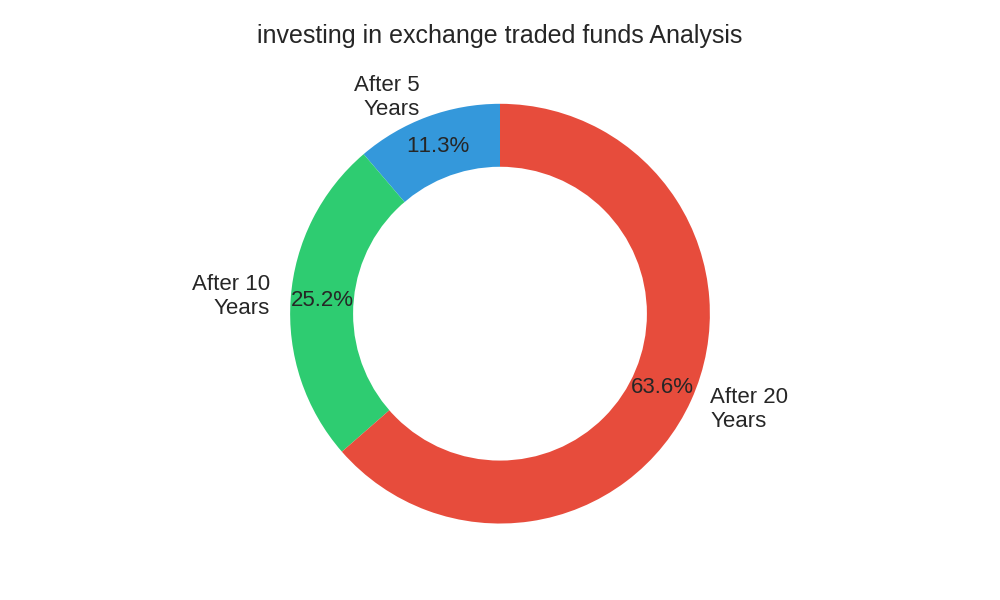
To illustrate this, let’s look at a hypothetical scenario. Suppose you start with an initial investment of $1,000 and contribute an additional $100 per month to an ETF, earning an average annual return of between 6% and 8%.
| Investment Horizon | Estimated Portfolio Value (6% Annual Return) | Estimated Portfolio Value (8% Annual Return) |
|---|---|---|
| After 5 Years | ~$7,500 – $8,000 | ~$8,000 – $8,500 |
| After 10 Years | ~$16,000 – $17,000 | ~$18,000 – $19,000 |
| After 20 Years | ~$35,000 – $38,000 | ~$45,000 – $48,000 |
*These figures are illustrative examples based on consistent contributions and assumed average returns, not a guarantee of future performance. Actual returns will vary.

Frequently Asked Questions About ETFs
What’s the difference between an ETF and a mutual fund?
While both pool money from investors to buy a basket of securities, the main difference lies in how they trade. ETFs trade on stock exchanges throughout the day, similar to individual stocks. Mutual funds, on the other hand, are typically bought and sold once a day at their net asset value (NAV) after the market closes. ETFs also generally have lower expense ratios and are often more tax-efficient.
Are ETFs safe? Can I lose money?
ETFs are generally considered a safe investment vehicle in terms of their structure and regulation. They are regulated by the SEC. However, like any investment tied to the market, the value of an ETF can fluctuate, and you can lose money. The “safety” depends on the underlying assets and market conditions. For instance, an ETF tracking a volatile market segment will be riskier than one tracking stable bonds.
How are ETFs taxed?
ETFs generally offer tax advantages over mutual funds due to their “in-kind” redemption mechanism, which can help minimize capital gains distributions to shareholders. However, profits from selling an ETF for more than you paid (capital gains) are taxable. Dividends received from an ETF are also taxable. Tax implications can vary depending on your specific situation and the type of ETF. It’s always wise to consult a tax professional.
Do I need a lot of money to start investing in ETFs?
No, you don’t. Many ETFs can be bought for the price of a single share, which could be as low as $20-$100, depending on the fund. Many brokerages also offer fractional share investing, allowing you to invest a specific dollar amount (e.g., $50) even if it means buying a fraction of an ETF share. This makes ETFs highly accessible for investors of all budget sizes. You can check market news and ETF performance on financial news sites like Bloomberg. (Explore Bloomberg.com)
Conclusion: Empowering Your Investment Journey with ETFs
Investing in Exchange Traded Funds offers a compelling blend of diversification, flexibility, and cost-effectiveness. They make it easier than ever for individual investors to access broad markets and specialized sectors with relative ease. By understanding what ETFs are, their benefits, and how to choose them, you’re well-equipped to start building a robust investment portfolio.
Ready to take control of your financial future? Begin your research today, open a brokerage account, and explore the vast world of ETFs. Always remember to align your investments with your personal financial goals and risk tolerance. If you feel unsure, consider consulting a qualified financial advisor to help tailor a strategy just for you.
Disclaimer: The information provided in this article is for educational purposes only and does not constitute financial advice.