

The crushing weight of college tuition can feel like an impossible burden, especially when financial aid falls short. You’re a parent, and your deepest desire is to give your child the best start, free from debilitating student debt. But the financial gaps can be significant, leading many families, perhaps like yours, to consider a PLUS parents loan. Is it the life raft you need, or a lead anchor that could sink your own financial future?
As a senior financial strategist and consumer advocate, I see firsthand the tough decisions parents face. Deciding on a plus parents loan isn’t just about numbers; it’s about balancing your child’s dreams with your own long-term financial stability. Let’s cut through the noise and figure out if this is the right move for your family, right now.

Understanding the PLUS Parents Loan: Beyond the Basics
A PLUS parents loan, or Direct PLUS Loan, is a federal loan available to parents of dependent undergraduate students. It allows you to borrow up to the cost of attendance at your child’s school, minus any other financial aid they receive. Sounds straightforward, but here’s where many parents stumble.
Imagine your child gets into their dream university with a total cost of $50,000 per year. They receive $20,000 in scholarships and federal student loans. That leaves a $30,000 gap. You might think, “Great, a PLUS loan can cover that!” And it can. However, unlike other federal student loans, the PLUS loan requires a credit check, and the interest rate can be higher, fixed for the life of the loan. This is a critical factor for your future budget.
Common Myths to Avoid: Don’t Fall for These Traps
Many parents go into this process with misconceptions. Let’s bust a few that could derail your financial plan:
- Myth #1: It’s My Child’s Loan. No, it’s your loan. You, the parent, are solely responsible for repayment, even if your child promises to help. This means it impacts your credit, your debt-to-income ratio, and your ability to save for retirement.
- Myth #2: The Interest Rate is Always Low. While federal PLUS loans often have lower rates than private loans, they are typically higher than federal direct student loans offered to your child. For example, a Direct PLUS Loan might carry an interest rate around [VERIFY_STAT]% while Direct Subsidized/Unsubsidized Loans for students are lower. This difference matters immensely over 10-20 years.
- Myth #3: I Can Just Pay It Off Early if Things Get Better. While technically true, many parents find themselves stretched thin. The reality is, if you’re taking on significant PLUS debt, your budget might be tighter than you anticipate, making early payoff a challenging goal.
The True Cost: Beyond the Monthly Payment
When considering any loan, especially a substantial one like a PLUS parents loan, you must look beyond the monthly payment. What’s the total cost of borrowing over the life of the loan? This includes interest, origination fees, and the opportunity cost of what you could have done with that money instead.
Let’s consider a scenario: You borrow $25,000 each year for four years, totaling $100,000. With a typical interest rate of, say, 7.5% and a standard 10-year repayment plan, your monthly payment could be around $1,200. Over a decade, that’s over $44,000 in interest alone. That’s money that could have gone into your retirement, home improvements, or emergency savings. The sticker price of the loan is just the beginning.
Pro/Con Analysis: Is a PLUS Loan Right For You?
Let’s weigh the direct benefits and significant drawbacks of the PLUS parents loan, so you can make an informed decision for your family.
Pros:
- Fills Funding Gaps: It can cover the full difference between other aid and the cost of attendance, ensuring your child can attend their chosen school.
- Fixed Interest Rate: The interest rate remains the same for the life of the loan, offering predictability in your payments.
- Federal Loan Benefits: While fewer than student loans, they still offer some protections like deferment options in certain circumstances, which private loans often lack. You can learn more about federal loan specifics at StudentAid.gov.
Cons:
- Higher Interest Rates & Fees: Generally higher than other federal student loans, and an origination fee is deducted from each disbursement, meaning you receive slightly less than you borrow.
- Parent is Responsible: This debt is solely yours, impacting your debt-to-income ratio and potentially your eligibility for other loans (e.g., mortgages) or your retirement plans.
- Limited Repayment Options: While federal, repayment options are less flexible than for Direct Loans taken by students. Income-driven repayment plans are only available if you consolidate the PLUS loan first.
- No Student Debt Relief Transfer: If your child plans to work in public service, they might qualify for Public Service Loan Forgiveness (PSLF) on their own federal loans. PLUS loans, as parent loans, do not directly qualify for PSLF unless consolidated into a Direct Consolidation Loan and then put on an income-contingent repayment plan. It’s complex and requires careful planning.

Insider Tips for Navigating the PLUS Loan Decision
Before you commit, here’s what the generic articles won’t tell you:
- Tip #1: Exhaust All Other Options First. Have you appealed for more institutional aid? Explored state-specific grants or private scholarships? What about federal student loans in your child’s name (Direct Subsidized/Unsubsidized)? These are almost always better options due to lower rates and better repayment terms.
- Tip #2: Consider a Less Expensive School. This is hard to hear, but if a PLUS loan is the only way, the school might be too expensive. A less costly institution or a gap year to save more might be a wiser long-term financial decision for the whole family.
- Tip #3: Run Your Own Retirement Numbers. Seriously. Use an online retirement calculator. Can you afford to take on this debt AND still hit your retirement savings goals? Many parents unknowingly sacrifice their retirement by funding their child’s education to this extent.
- Tip #4: Create a Debt Repayment Plan BEFORE Borrowing. Sit down with your child and outline who is paying what, and when. While you are legally responsible, involving your child in the repayment strategy can foster financial literacy and shared accountability.
How to Calculate Your Potential PLUS Loan Burden
Understanding the impact of a PLUS loan on your finances requires a practical look at the numbers. You need to estimate the total amount you’d borrow, the interest you’d pay, and what that truly costs over time. Don’t just look at the monthly payment in isolation.
First, determine the total amount you might need to borrow for each year your child attends college. Multiply that by the number of years. For example, if you need $20,000 per year for four years, your total principal would be $80,000. Next, find the current federal PLUS loan interest rate and any origination fees from the Department of Education’s website. These fees are typically a small percentage of the loan amount but add up. Then, consider a repayment term, often 10 years, as a starting point. While there are other repayment plans, 10 years is a common baseline. Using these figures, you can estimate your monthly payment and the total interest paid over the life of the loan. This total interest figure reveals the real cost beyond the principal.
For more detailed calculations, you can use a student loan calculator:
Parents PLUS Loan Impact Estimator
| Scenario | Total Principal Borrowed (Example) | Estimated Total Interest Paid (Example) | Total Payback Amount (Example) |
|---|---|---|---|
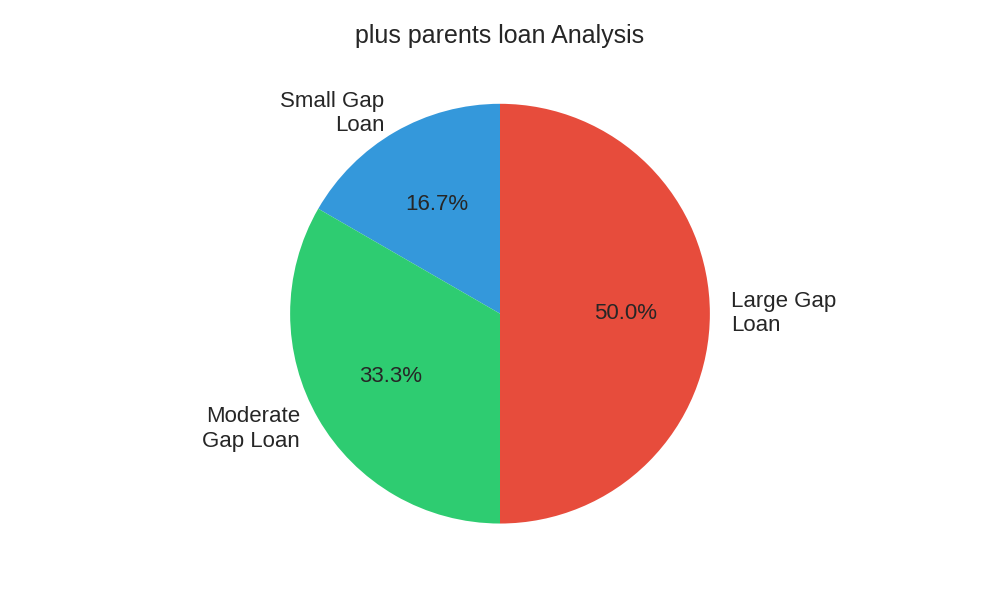
| Small Gap ($10,000/year for 4 years) | $40,000 | ~$14,000 – $18,000 | ~$54,000 – $58,000 |
| Moderate Gap ($20,000/year for 4 years) | $80,000 | ~$28,000 – $36,000 | ~$108,000 – $116,000 |
| Large Gap ($30,000/year for 4 years) | $120,000 | ~$42,000 – $54,000 | ~$162,000 – $174,000 |
*Estimates based on a 7.5% fixed interest rate over a 10-year standard repayment plan. Actual figures will vary based on current rates, fees, and repayment terms.

The Alternative Path: Don’t Dismiss These Options
Before you sign on the dotted line for a plus parents loan, explore these powerful alternatives:
- Private Loans (with Caution): Private student loans might offer lower interest rates if you have excellent credit. However, they lack federal protections like income-driven repayment or deferment. Compare carefully, and understand the trade-offs. You can research reputable private lenders, but always prioritize federal options first.
- Payment Plans and Family Contributions: Can the college offer an interest-free payment plan spreading costs over the semester? Can your child contribute more from summer jobs or part-time work during school? Every dollar saved is a dollar not borrowed.
- Community College First: Consider starting at an affordable community college for the first year or two, then transferring to a four-year institution. This can significantly reduce overall costs without sacrificing the degree. This strategic move can save tens of thousands of dollars.
The Consumer Financial Protection Bureau offers excellent resources on understanding different loan types and repayment options. Visiting their site at ConsumerFinance.gov can provide valuable insights.
Conclusion: Your Family’s Financial Health Comes First
The decision to take out a PLUS parents loan is profoundly personal, but it should be rooted in cold, hard financial reality, not just emotion. Remember, your child’s financial success is often tied to your own stability. If taking on significant PLUS debt jeopardizes your retirement, emergency savings, or ability to cover unforeseen expenses, it might be too high a price.
Don’t be afraid to say no, or to explore options that involve a less expensive educational path. Your child will thank you for preserving your family’s financial health in the long run. Take the time to run the numbers, consider all alternatives, and make a decision that you can live with comfortably for the next decade or more.
Call to Action: Review your current financial aid package, speak with your child’s financial aid office, and consult with a certified financial planner. Get a clear picture of every dollar in and out before committing to a PLUS loan.
Disclaimer: The information provided in this article is for educational purposes only and does not constitute financial advice.