

Life insurance is a cornerstone of responsible financial planning, offering a vital safety net for your loved ones. Understanding how a life insurance company operates and the different types of policies available is crucial for securing your family’s future. This comprehensive guide will demystify life insurance, explain its importance, and help you navigate the process of choosing the right coverage and provider.

What is Life Insurance and Why Do You Need It?
Life insurance is a contract between you and a life insurance company. In exchange for regular premium payments, the insurer promises to pay a lump sum of money, known as a death benefit, to your designated beneficiaries upon your passing. This financial safeguard is designed to replace your income and cover future expenses, ensuring your family’s financial stability even when you’re no longer there.
Why it matters in real life: Imagine you are the primary earner for a family with young children and a mortgage. Without life insurance, your sudden absence could leave your family struggling to cover daily living expenses, tuition, or even keep their home. A death benefit provides them with the funds to maintain their lifestyle and pursue their goals.
Types of Life Insurance: Choosing Your Coverage
Understanding the fundamental types of life insurance is the first step toward making an informed decision. Each offers distinct features to suit different needs and financial goals.
Term Life Insurance
Term life insurance provides coverage for a specific period, or “term,” such as 10, 20, or 30 years. It’s often the most affordable option, as it only pays out if you pass away within the chosen term. If the term expires and you’re still living, the policy ends, and there’s no payout.
Scenario: A young couple with a 25-year mortgage and two small children might choose a 20-year term policy. This ensures their income is replaced during the critical years of raising their family and paying off their largest debt. It’s a straightforward and cost-effective way to get substantial coverage for a defined period.
Whole Life Insurance
Whole life insurance is a type of permanent life insurance designed to provide coverage for your entire life, as long as premiums are paid. It also includes a cash value component that grows over time on a tax-deferred basis. You can borrow against or withdraw from this cash value, offering financial flexibility.
Example: Someone might purchase a whole life policy in their 30s. By their 60s, the policy could have accumulated significant cash value. This value could then be used as collateral for a loan, or partially withdrawn to supplement retirement income, while still maintaining a death benefit for their heirs.
Universal Life and Other Variants
Universal life insurance offers more flexibility than whole life, allowing you to adjust premium payments and death benefits within certain limits. Other permanent options include Variable Life and Indexed Universal Life, which offer potential for greater cash value growth tied to market performance, though with increased risk.
Why it matters: The right type of policy aligns with your financial goals, budget, and desired flexibility. Term life is excellent for temporary, high-coverage needs, while permanent life insurance can be part of a long-term wealth transfer or estate planning strategy.
How to Determine Your Life Insurance Needs
Calculating the appropriate amount of life insurance coverage can feel daunting, but it’s essential for providing adequate protection. A common approach is the DIME method.
- D – Debts: Include mortgages, car loans, credit card balances, and any other outstanding liabilities your family would inherit.
- I – Income: Estimate how many years your family would need to replace your annual income. Multiply your current annual income by this number (e.g., 5-10 years).
- M – Mortgage: Factor in the remaining balance on your mortgage to ensure your family can stay in their home.
- E – Education: Consider future education costs for your children, from college tuition to private school fees.
- O – Other Expenses: Account for final expenses (funeral costs), emergency funds, and any other significant future needs.
Mini Case Study: A family has a $300,000 mortgage, $20,000 in car loans, and $5,000 in credit card debt. The primary earner makes $70,000 annually, and they want to replace 8 years of income ($560,000). They also anticipate $100,000 per child for education for their two children ($200,000 total) and $15,000 for final expenses. Their total estimated need would be roughly $1.1 million, providing a clear target for coverage.
Why it matters: This systematic approach helps ensure you don’t overpay for unnecessary coverage or, more critically, leave your family underinsured. It provides a realistic number based on their actual future financial requirements.

The Role of a Life Insurance Company: More Than Just Policies
A reputable life insurance company does more than just issue policies. They are responsible for underwriting, managing investments, and processing claims efficiently. Their financial strength and customer service are paramount.
Example: When a policyholder passes away, the beneficiaries file a claim with the insurance company. A well-managed insurer will have a clear, efficient process to verify the claim and disburse the death benefit promptly, providing much-needed financial relief during a difficult time. Companies invest the premiums collected to ensure they have the funds to pay out claims in the future. You can learn more about how insurance companies are regulated and protected by visiting the National Association of Insurance Commissioners (NAIC) website.
Why it matters: Choosing a financially stable and reliable life insurance company means peace of mind. You want assurance that your beneficiaries will receive their payout without undue delays or complications when they need it most.
Understanding Life Insurance Premiums and Costs
The cost of your life insurance, known as the premium, is determined by several factors. These factors help the life insurance company assess the risk associated with insuring you.
Common factors include:
- Age: Younger applicants generally pay lower premiums, as the risk of payout is further in the future.
- Health: Your current health, medical history, and family health history significantly influence your rates. Healthy individuals typically receive better rates.
- Lifestyle: Hobbies like skydiving or occupations with high risks can increase premiums. Smoking or excessive alcohol consumption will also lead to higher costs.
- Coverage Amount: A higher death benefit naturally results in higher premiums.
- Policy Type: Permanent policies (whole life, universal life) typically have higher premiums than term life due to their cash value component and lifelong coverage.
Why it matters: Understanding these factors empowers you to make choices that could potentially lower your premiums, such as improving your health or opting for a policy type that aligns with your budget.
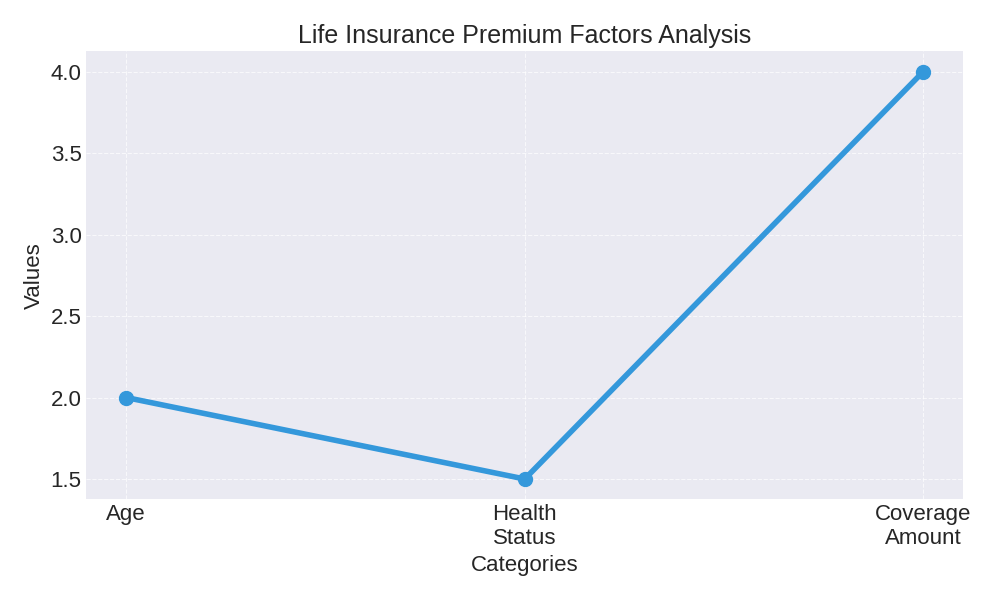
| Factor | Typical Impact on Premium | Example Scenario |
|---|---|---|
| Age (e.g., 30 vs. 50) | Significantly higher with age | A 50-year-old might pay 2-3 times more than a 30-year-old for the same coverage. |
| Health Status (Excellent vs. Poor) | Substantially higher for poor health | A smoker could pay 1.5-2 times more than a non-smoker. |
| Policy Term (10 vs. 30 years) | Higher for longer terms | A 30-year term policy is typically more expensive than a 10-year term for the same death benefit. |
| Coverage Amount ($250K vs. $1M) | Directly proportional | A $1 million policy will cost roughly 4 times more than a $250,000 policy. |
How to Calculate Your Life Insurance Coverage Needs (The DIME Method Explained)
To calculate your life insurance needs, you’re essentially adding up all the financial obligations and future expenses your income supports. This isn’t a complex math problem with exponents, but a practical estimation.
First, list out all your current outstanding debts. This includes your mortgage balance, car loans, personal loans, and any credit card debt. Add all these figures together.
Next, consider your annual income. Decide how many years you’d want your income replaced for your family – usually between five and ten years is a good starting point. Multiply your annual income by this number of years. For example, if you earn $60,000 a year and want 7 years of replacement, that’s $420,000.
Then, think about future education costs for your children. Estimate how much you want to set aside for each child’s college fund, and add that to your total. Don’t forget to include funeral and burial expenses, which can range from several thousand dollars.
Add all these individual amounts (debts + income replacement + education + final expenses) together. The grand total is a strong estimate of the total life insurance coverage you might need.
Life Insurance Cost of Waiting
Choosing the Right Life Insurance Company: What to Look For
Selecting a reliable life insurance company is as important as choosing the right policy. You need an insurer you can trust to deliver on its promise.
- Financial Strength Ratings: Look for high ratings from independent agencies like A.M. Best, Standard & Poor’s, or Moody’s. These ratings indicate the company’s ability to pay out claims. You can often find these ratings on the insurer’s website or through financial rating services like A.M. Best.
- Customer Service: Research customer reviews and ratings for service quality. A company with excellent customer service will make the application and claims process smoother.
- Policy Options and Riders: Does the company offer a variety of policies and optional riders (add-ons) that meet your specific needs? This could include a waiver of premium for disability or accelerated death benefit riders.
- Competitive Premiums: While not the sole factor, compare quotes from several companies for similar coverage to ensure you’re getting a competitive rate.
Scenario: You’ve narrowed down your choices to two companies. Company A has slightly lower premiums but a “B+” financial strength rating and mixed customer reviews. Company B has slightly higher premiums but an “A+” rating and consistently positive customer feedback. Opting for Company B, despite the higher cost, provides greater assurance of reliability and a smoother experience for your beneficiaries.
Navigating the Application and Underwriting Process
Once you’ve selected a policy and a life insurance company, you’ll go through the application and underwriting process. This involves providing personal and medical information, which the insurer uses to assess risk and determine your premium.
The process typically includes completing a detailed application form, which covers your health history, lifestyle, and financial situation. Most policies require a medical exam, including blood and urine tests, to evaluate your current health. Be honest and thorough in your application to avoid any issues or denial of claims in the future.
Why it matters: This process ensures that both you and the life insurance company have a clear understanding of the policy terms and conditions. Accurate information leads to appropriate coverage and helps prevent complications when a claim is eventually made.

Frequently Asked Questions About Life Insurance
What happens if I stop paying my premiums?
If you stop paying premiums on a term life policy, it will eventually lapse, and coverage will end. For permanent policies, the cash value might be used to keep the policy in force for a period, or the policy could lapse, potentially resulting in a loss of coverage and some or all of the cash value.
Can I change my policy after I buy it?
It depends on the policy type. Term policies are generally less flexible, but you might be able to convert a term policy to a permanent one. Permanent policies offer more flexibility in adjusting death benefits or premium payments, though certain changes may require underwriting approval.
Is life insurance taxable?
Generally, the death benefit paid to beneficiaries from a life insurance policy is income tax-free. However, certain situations, like policies held in an estate or if the cash value is surrendered, might have tax implications. For specific tax advice, consult a qualified tax professional or refer to resources from the Internal Revenue Service (IRS).
Conclusion: Securing Your Legacy with a Life Insurance Company
Choosing the right life insurance policy and a reliable provider is one of the most impactful financial decisions you can make. It’s not just about protecting your assets; it’s about safeguarding the future and well-being of those you cherish most. By understanding the types of coverage, calculating your needs, and carefully selecting a financially strong life insurance company, you provide an invaluable gift of security and peace of mind.
Call to Action: Don’t leave your family’s future to chance. Take the crucial step today to explore your life insurance options and consult with a qualified financial advisor to tailor a plan that fits your unique needs.
Disclaimer: The information provided in this article is for educational purposes only and does not constitute financial advice.